
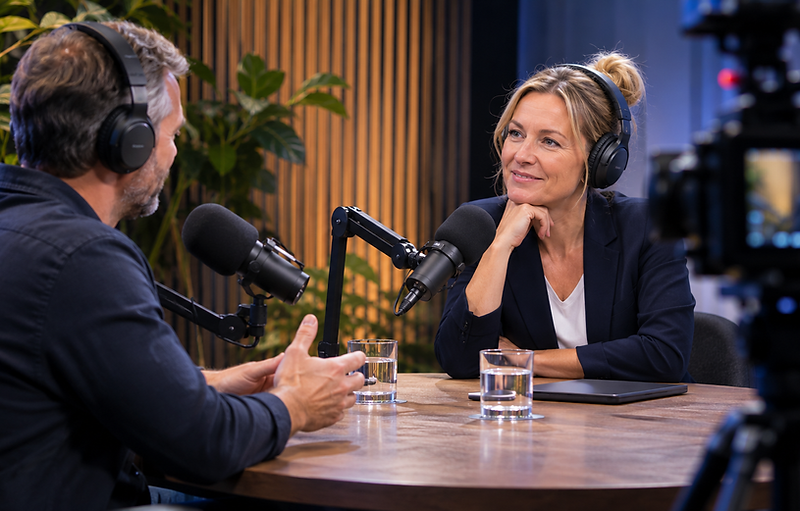
Does a podcast really need video?
More and more podcasts are being filmed, but when does video genuinely add value? Explore the differences between audio and video podcasts, the impact on production and the opportunities for distribution.
More and more podcasts are being filmed. Full conversations appear on YouTube, while short clips circulate on social media. But does video automatically make a podcast better? Not necessarily. The real question is what visuals add to the content and how the audience will experience the podcast.
A podcast doesn't need to be watched
Much of the appeal of podcasts lies in their simplicity. You can listen while driving, walking or cooking. You don't need to look at a screen to follow a good conversation. For interviews, in-depth discussions and knowledge sharing, audio is often more than enough.
Yet cameras are becoming increasingly common in podcast studios. Sometimes because facial expressions and interactions add another dimension to the conversation. Sometimes because organisations also want to distribute their podcasts through YouTube or social media. These are valid reasons to consider video. But they don't make it essential. A conversation between two experts doesn't automatically become more interesting simply because you can see them.
The greatest value sometimes lies beyond the episode
One of the strongest arguments for video is the opportunity to create short clips from a longer conversation. A surprising statement, a particularly clear answer or an interesting exchange can become a standalone video for LinkedIn, Instagram or other platforms. This allows the content to reach people who might never have discovered the full podcast.
But preparation matters here too. A sixty-second clip doesn't automatically work just because it comes from an interesting conversation. It needs enough context to make sense without the rest of the episode. If video clips are part of the distribution strategy, it's worth thinking about them before recording begins.
Filming a podcast isn't the same as creating great video content.
Video changes the entire production
An audio podcast essentially requires a quiet recording environment, good microphones and a conversation worth listening to. Video introduces additional considerations: camera angles, lighting, a suitable background and visual editing. Participants may also become more conscious of being on camera. That can influence the dynamics of the conversation.
And the work doesn't end when the recording stops. Audio editing can focus entirely on the rhythm and content of the discussion. With video, the images also need to remain visually consistent when sections are removed. If short vertical clips are required for social media, those need additional editing too.
Video therefore creates more opportunities, but also requires more preparation, production time and budget. That investment makes sense when the footage will genuinely be used. Less so when the video serves little purpose beyond its initial publication.
Start with the audience, not the cameras
The most important decision actually happens before the podcast is recorded. Who are we trying to reach? Where will people discover our episodes? And how will they listen or watch?
An internal podcast for employees has different requirements from a public interview series designed to reach new audiences. For a specialised professional audience, an audio podcast can be particularly valuable. When visibility and social media distribution matter, video may offer additional opportunities.
Both formats can also work together. A conversation can be published as a video while remaining available as an audio podcast. In that case, it's important that the content still makes sense without the visuals. Ultimately, the question isn't whether video is technically possible.
A podcast doesn't become better because there are cameras in the room. It becomes better when the chosen format strengthens the story and reaches the audience in the right way.