
A webinar is not just a meeting with a camera.
A webinar is much more than an online meeting with a camera. Discover why professional directing, meaningful interaction and thoughtful presentation make the difference between a broadcast people simply watch and a webinar that truly engages them.
A camera, a microphone and a presentation. That's all you need for a webinar, right? Technically, perhaps. But there's a world of difference between an online meeting and a professional webinar. And that difference starts with the viewer.
A webinar is not a Teams meeting
We've all experienced it. A speaker sharing their screen, a presentation with 78 slides and a tiny face in the bottom corner that occasionally moves. Twenty minutes in, nobody knows whether the speaker is on slide 34 or 35. Meanwhile, the audience is mainly catching up on emails.
That's not a technical problem. It's a problem of approach.
A meeting is designed for exchanging information between people who actively participate. A webinar generally addresses an audience that primarily watches and listens. It may seem like a small distinction, but it changes almost everything.
The viewer always has a remote control
At a physical event, participants are seated in a room. They've made an effort to attend, they're surrounded by other people and they generally stay until the end.
Online, things are different. The viewer is sitting behind a computer, often with a smartphone within reach. One incoming email, a colleague stopping by or a sudden interest in the weather forecast can be enough to lose their attention. That's why a webinar shouldn't just be informative. It should also be enjoyable to watch.
This requires rhythm, variety and a carefully considered structure. A good webinar respects the viewer's attention rather than taking it for granted.
Directing is more than pressing a button
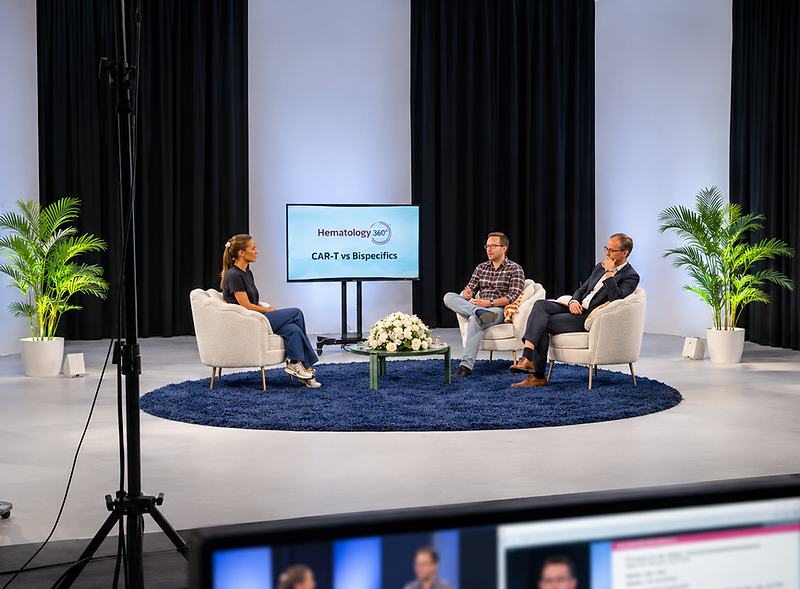
Behind the scenes of a professional webinar production, far more happens than the viewer might imagine. Cameras switch between speakers, presentations appear at the right moment, questions are monitored and transitions are prepared. The production director controls the pace and ensures everything comes together as one coherent experience.
Good directing is barely noticeable. And that's exactly the point. Think of a television programme. Nobody expects a talk show to consist of one fixed camera angle for sixty minutes. So why should we accept that from a webinar?
Of course, that doesn't mean every webinar needs a television studio or five cameras. It simply means someone should consciously consider what the viewer sees, and when.
Interaction shouldn't be a box-ticking exercise
Many webinars include a Q&A session at the end. That's perfectly fine, but interaction doesn't have to be limited to the final five minutes. A relevant poll, a short question to the audience or a response to incoming comments can increase engagement. Provided, of course, that the interaction actually adds something.
Running a poll and then completely ignoring the results serves little purpose. It's essentially the digital equivalent of asking people to raise their hands without bothering to see who responds. Good interaction is part of the programme, not merely a technical feature that happens to be available.
The speaker is still the most important image
Technology can improve many things, but it cannot rescue a poorly prepared presentation. A speaker who simply reads their slides won't suddenly become engaging because another camera is added. A presentation filled with tiny text won't become more readable just because it's broadcast in 4K.
Preparing speakers is therefore just as important as preparing the technology. Where should the speaker look? How will the presentation be used? When does another speaker take over? And what is the one message the viewer should remember? A good production supports the content. It doesn't try to replace it.
Think like a programme producer, not a meeting organiser
The most important question when organising a webinar isn't which software to use or how many cameras you need. The most important question is: why would someone voluntarily keep watching this for an entire hour?
Taking that question seriously leads to different choices. About content, duration, presentation, interaction and technology.
And that's precisely where the difference emerges between an online meeting that happens to be broadcast and a webinar that's genuinely worth watching.
Because clicking 'Start webinar' is easy. Making sure nobody wants to click 'Leave', that's the real challenge.